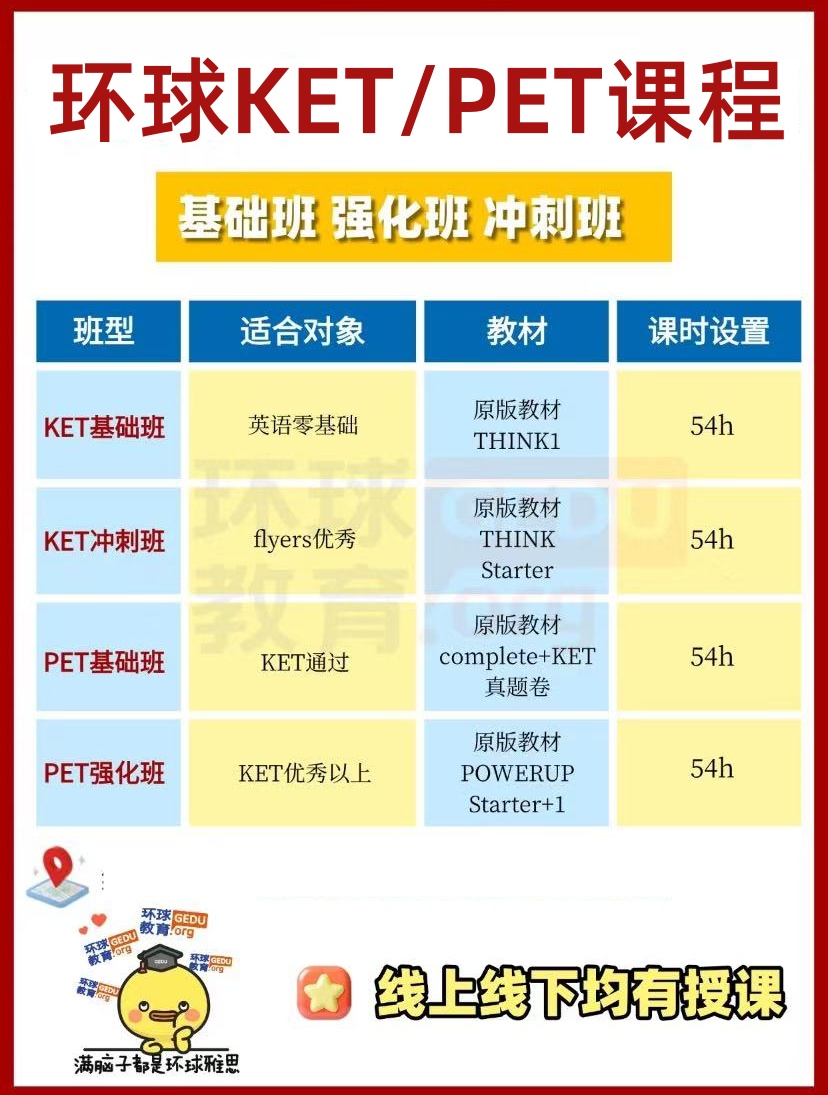
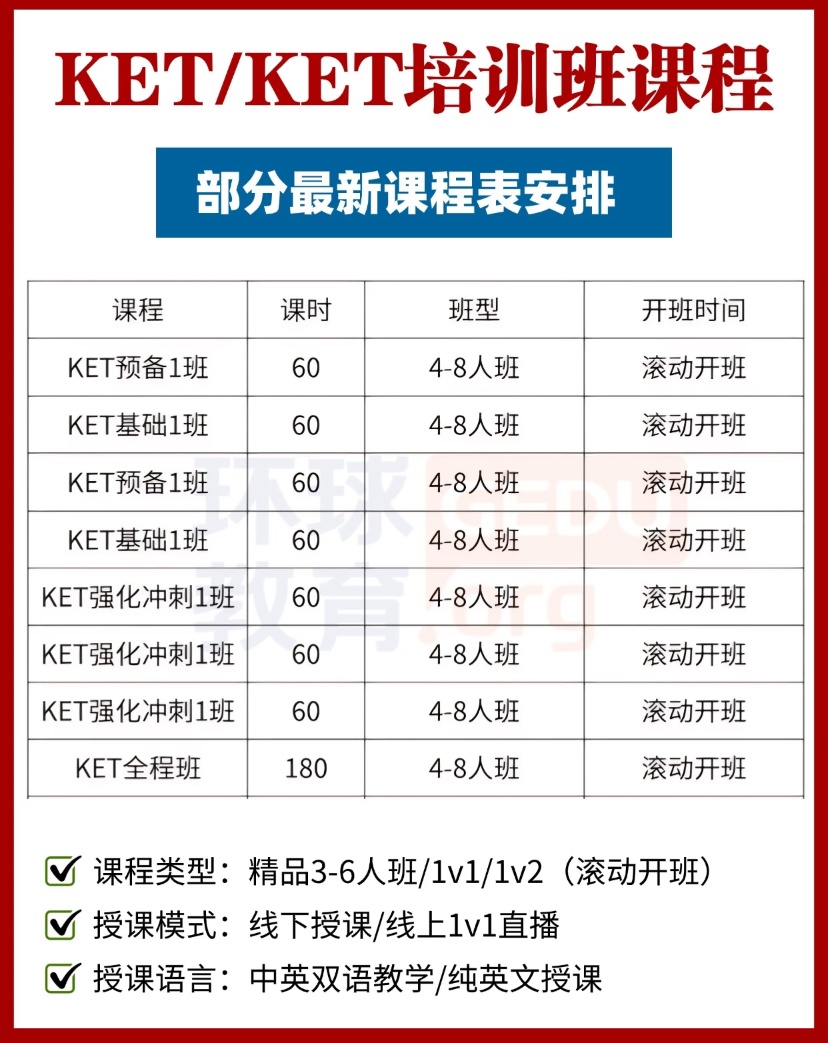
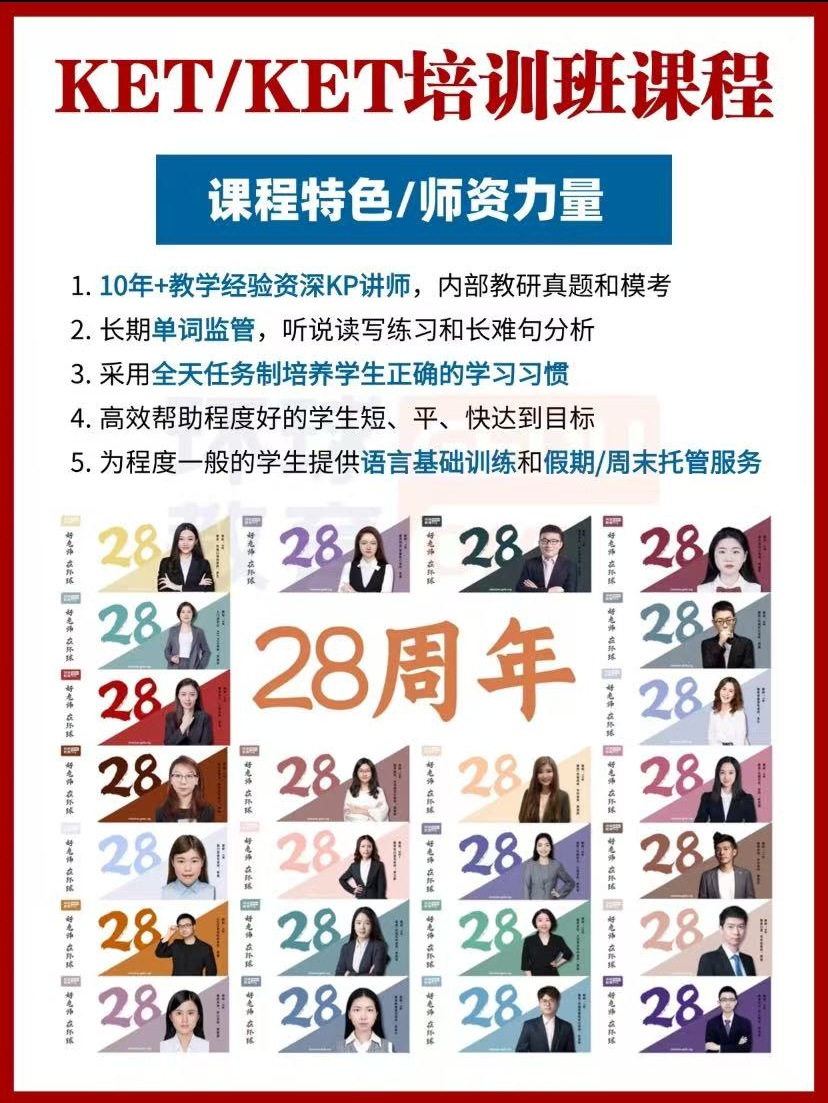
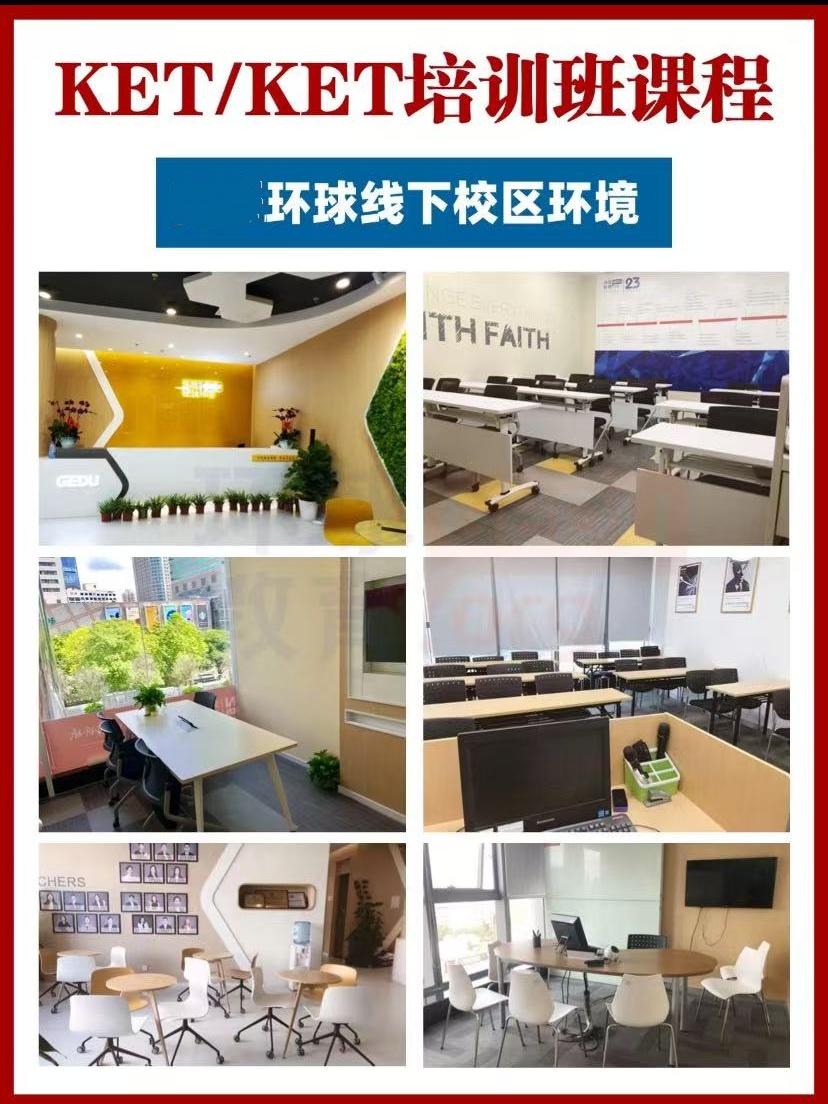
北京本地精选靠谱的ket寒假报名培训机构名单公布
9.陈述部分的主语为不定代词somebody (someone), anybody (anyone), nobody (no one), everybody (everyone) none, neither时,问句部分的主语用he或 they,这时问句动词的数应和he或 they一致。
Someone has taken the seat, hasn’t he?
有人已经坐了位置,是吗?
Everyone has done their best in the game, haven’t they? .
每个人在比赛中已经尽力了,是吗?
10.陈述部分的主语是指示代词this或that时,反意疑问句的主语用it,当陈述部分的主语是指示代词these或those时,其反意疑问句的主语用they。例如:
This is a plane, isn't it?
这是一架飞机,是吗?
These are grapes,aren't they?
这些是葡萄,是吗?
11.当陈述部分有情态动词must,问句有4种情况:
(1)mustn't表示“禁止,不可,不必”时,附加问句通常要用must.
You mustn't stop your car here, must you?
你不能把车停在这地方,知道吗?
(2)must表示“有必要”时,附加问句通常要用needn't.
They must finish the work today, needn’t they?
他们今天要完成这项工作,是吗?
(3)当must用来表示对现 在的情况进行推测时,问句通常要根据must后面的动词采用相应的形式。
He must be good at English, isn’t he?
他英语一定学得很好,是吗?
She must be a good English teacher, isn’t she?
她一定是位的英语老师,是吗?
12.当陈述部分谓语动词是need,且这些词被用作实义动词时,其反意疑问句需用do的适当形式。若need 为情态动词,疑问部分用need构成。
We need to help them, don’t we?
You needn’t go there, need you?
 北京环球剑桥英语培训机构